How to Choose a VPN in 2026: NordVPN, Surfshark, ExpressVPN and Proton Compared
How to choose a VPN without overpaying: the checks that matter, and four providers compared on renewal price, audits, devices and guarantees.
 10 min read

How to choose a VPN comes down to four checks: the price you will pay at renewal (not the intro price), whether independent auditors have verified the no-logs claim, how many devices the plan covers, and whether you can test it risk-free. Every provider below offers a 30-day money-back guarantee, which is the best way to settle the rest on your own connection.
To choose a VPN, compare the renewal price rather than the intro rate, look for independent no-logs audits, and use the 30-day money-back guarantee to test it. NordVPN is the most complete, Proton VPN the most transparent, Surfshark the best for unlimited devices.
Summarize this article with:
 ChatGPT
 Perplexity
 Claude
 Grok
We compared NordVPN, Surfshark, ExpressVPN and Proton VPN on those points, using each provider’s own pages in October 2026. We did not run speed or unblocking tests for this guide, so we do not rank them on performance. Prices are in US dollars where we could read them from a US server, and the date is stated every time.
What to check before you pay for a VPN
Renewal price. Almost every VPN advertises a low monthly rate on a 2-year plan, then renews at a much higher price. NordVPN’s Basic plan, for example, is $3.49 a month at sign-up but renews at $139.08 a year. Write down the renewal figure and the date, because that is what you will actually pay if you stay.
Independent audits. Every VPN says it keeps no logs. A claim that an outside firm has checked is worth more. Look for the auditor’s name, the year, and whether the audit is repeated. An audit is a snapshot, not a guarantee, but it beats a promise on a marketing page.
Who owns it, and where it is based. Several well-known VPNs share owners, and jurisdiction affects what a company can be forced to do. Proton VPN is Swiss. Surfshark shares a holding company with Nord Security. ExpressVPN has been owned by Kape Technologies since 2021, a fact some readers weigh heavily.
Devices and apps. Most plans cover 10 devices at once. Surfshark allows unlimited devices, which matters in a large household. Check that there is an app for each platform you use, including your router or TV if you want them covered.
Network size is a vendor claim. Server and country counts are self-reported and counted differently by each company, so a bigger number does not automatically mean better coverage. Check that the countries you need are on the list.
The guarantee. A 30-day money-back window turns a purchase into a free trial. Use it: test the apps, your streaming services and your speeds while you can still get a refund.
The four VPNs side by side
| VPN | Entry price (2-year plan) | Renewal | Devices | Network (vendor claim) | Audits | Guarantee |
|---|---|---|---|---|---|---|
| NordVPN Basic | $3.49 a month, +3 months free ($94.23 for 27 months) | $139.08 a year | 10 | 225+ locations | Deloitte, per our October notes | 30 days |
| Surfshark Starter | From $2.49 a month, +3 months free | Not shown on the pricing page | Unlimited | 4,500+ servers, 100 countries | Deloitte (2023, 2025), per our October notes | 30 days |
| ExpressVPN Basic | €2.49 a month (euro price), +4 months free | €79.95 a year (euro price) | 10 | 113 countries | KPMG (no-logs), PwC and Cure53 (TrustedServer) | 30 days, new users |
| Proton VPN Plus | $3.49 a month ($83.76 for 24 months) | $83.88 a year | 10 | 20,000+ servers, 140+ countries | Securitum, annual | 30 days |
Try it risk-free
NordVPN: 10 devices and a 30-day money-back guarantee
The Basic plan is $3.49 a month on the 2-year plan, $94.23 for the first 27 months, and renews at $139.08 a year.
See the NordVPN dealAffiliate link: we may earn a commission at no extra cost to you. Prices checked on October 23, 2026; confirm on the checkout page.
NordVPN: the most complete package
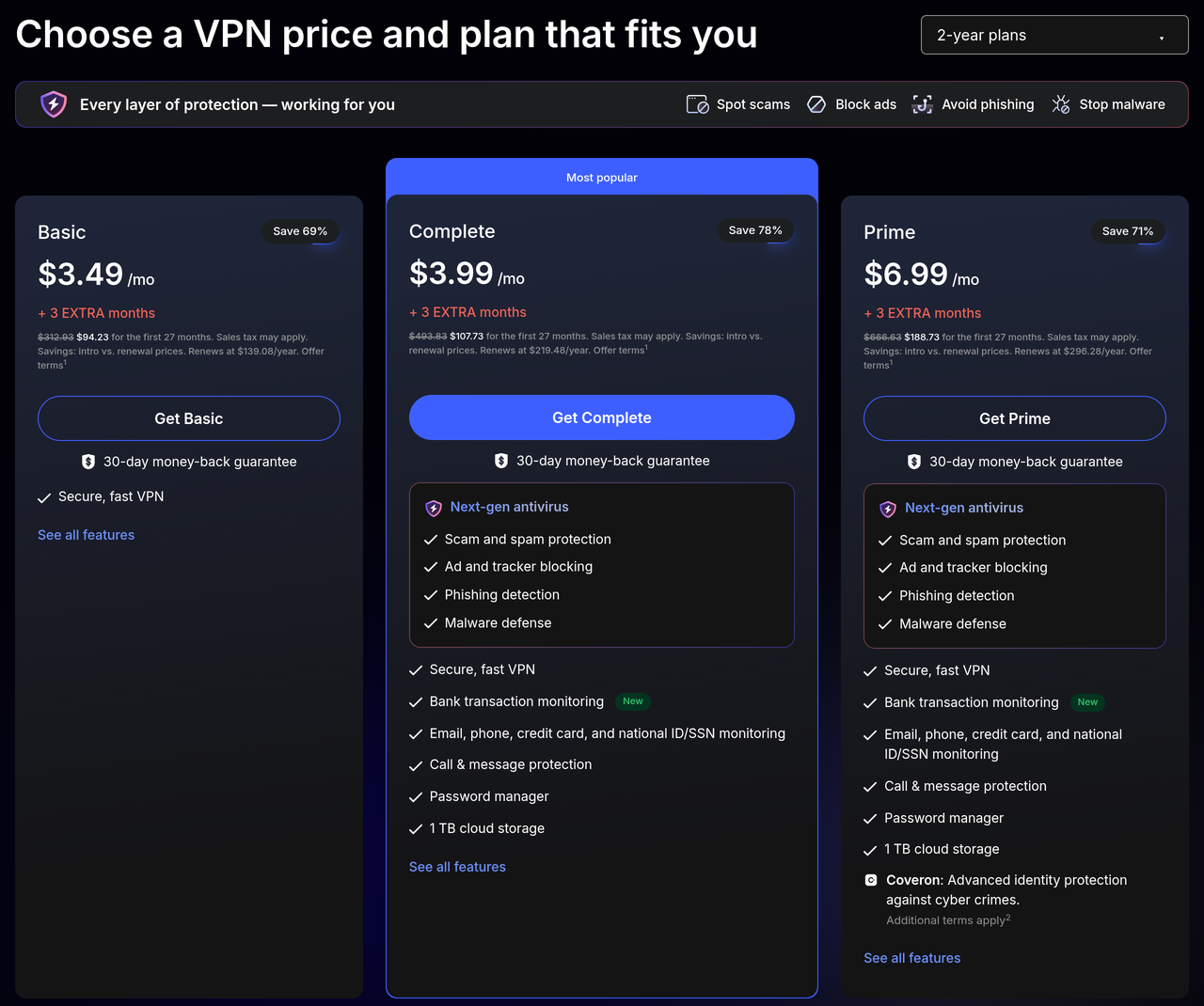
NordVPN is the one to pick if you want features and extras in one subscription. The VPN itself offers the NordLynx protocol (built on WireGuard), Double VPN, P2P servers and obfuscated servers, and one account covers 10 devices. NordVPN markets servers in more than 225 locations, a vendor claim from its pricing page.
The plan ladder matters. Basic ($3.49 a month) is the VPN. Complete ($3.99 a month, the most popular) adds an antivirus, ad and tracker blocking, phishing detection, a password manager and 1 TB of cloud storage. Prime ($6.99 a month) adds advanced identity protection. All three renew at higher rates: $139.08, $219.48 and $296.28 a year. The renewal is NordVPN’s weak point, and it is the highest of the four VPNs here.
Our NordVPN review covers the features in depth, and the NordVPN price guide shows how to keep the bill down.
Surfshark: unlimited devices for a whole household
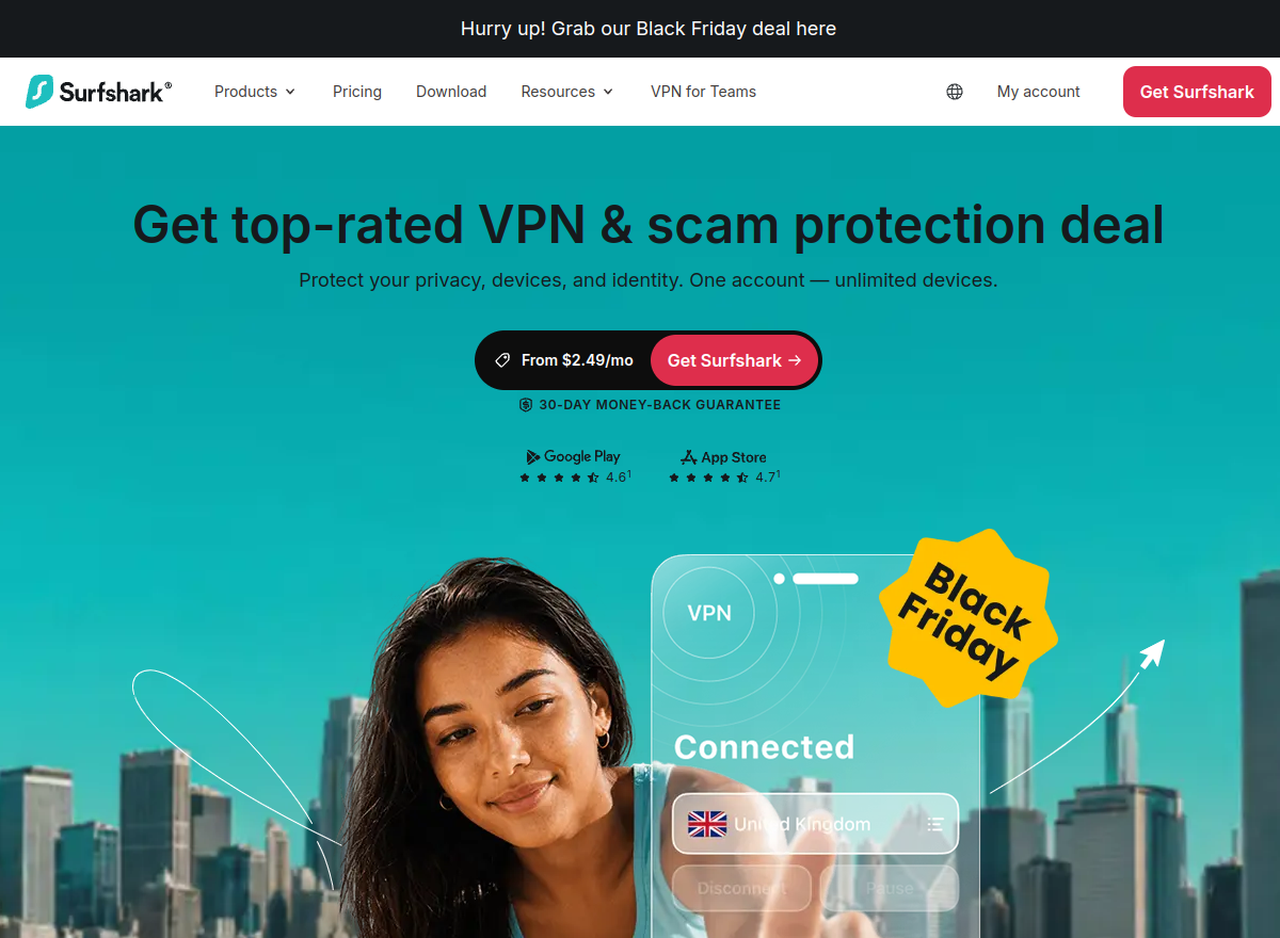
Surfshark’s selling point is simple: one subscription covers an unlimited number of devices. For a family with phones, laptops, tablets and TVs, that can save a second subscription. Surfshark says its network is 4,500+ servers in 100 countries, all running on RAM only, with a no-logs policy it describes as audited.
Its plans are Starter (the VPN), One and One+ (which add antivirus, alerts, identity features and data removal). On October 23, 2026 its US home page advertised a Black Friday price from $2.49 a month. Surfshark’s pricing page lists the sale price for the first 27 months but does not show the renewal amount, so check the checkout screen before committing. It shares a holding company with Nord Security since their 2022 merger, though the two VPNs are run separately. Surfshark has no affiliate link on this site, so we link to its official page.
ExpressVPN: audited, RAM-only, and owned by Kape
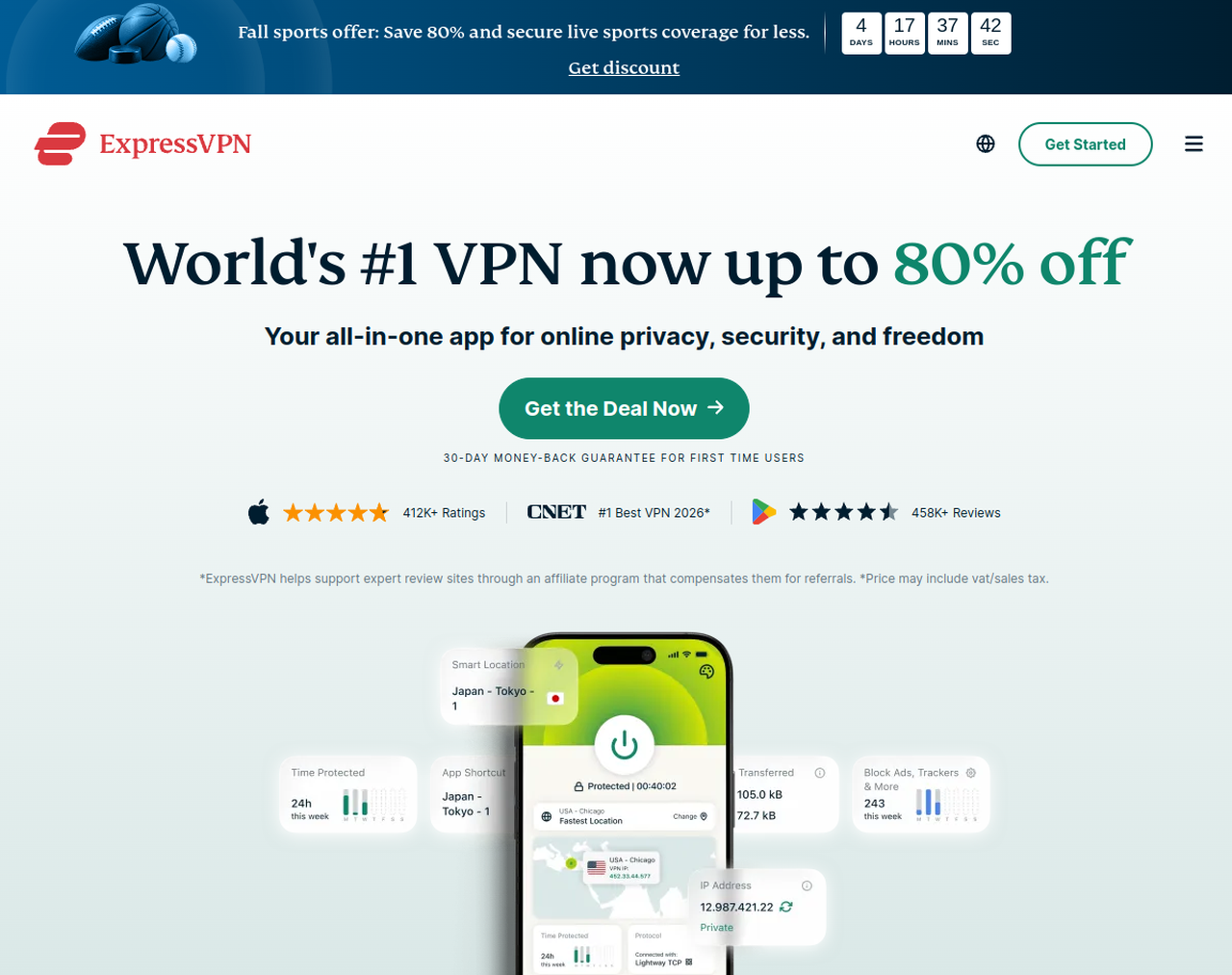
ExpressVPN builds its pitch on TrustedServer, its RAM-only server technology, which ExpressVPN says has been independently audited twice, by PwC and then by Cure53. It also cites repeated KPMG audits of its no-logs policy. The company has been owned by Kape Technologies since 2021, which may matter to you if corporate ownership is part of how you judge a VPN.
Its plan ladder is Basic (10 devices), Advanced (12 devices) and Pro (14 devices, with a dedicated IP included). On its pricing page read from Europe on October 23, 2026, Basic was €2.49 a month on the 2-year plan with 4 extra months (€69.72 for the first 28 months), renewing at €79.95 a year. We could not read the US dollar price, so check the US checkout before you buy. ExpressVPN says its servers are in 113 countries. ExpressVPN has no affiliate link on this site, so we link to its official page.
Proton VPN: the most transparent, with a free plan
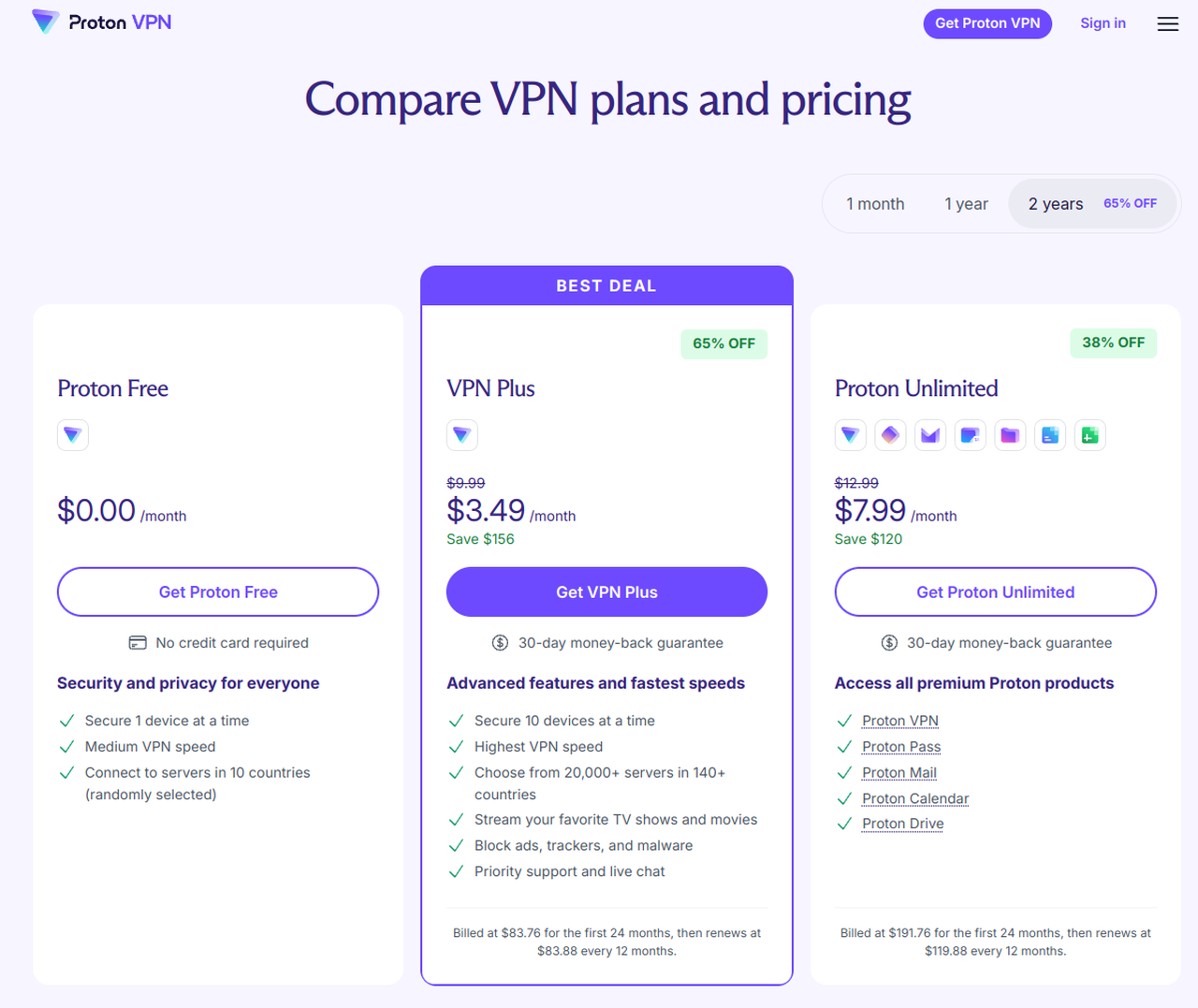
Proton VPN is based in Switzerland and publishes the code of its apps. It is the only one of the four with a permanent free plan: one device, servers in 10 countries chosen for you, no ads, no logs. VPN Plus is $3.49 a month on the 2-year plan and renews at $83.88 a year, well below NordVPN’s renewal. The compromise is that Proton does not advertise RAM-only servers.
Proton has also announced a Black Friday sale from October 26 to November 30, with 75% off the 24-month VPN Plus plan (no price yet). We go deeper in our Proton VPN review, and track the sales on the Black Friday 2026 page.
How much does a good VPN cost?
On the 2-year plans we read, the entry price is between $2.49 and $3.49 a month, and the renewal is higher: $83.88 a year for Proton VPN Plus and $139.08 a year for NordVPN Basic. Month-to-month plans cost far more. Proton’s list price for VPN Plus is $9.99 a month, for example, so a longer term is cheaper only if you will really use the VPN for that long.
The cheapest sensible approach is to pay for the term you are confident about, then re-check prices when it ends. Sales such as Black Friday lower the entry price, but the renewal is what you will pay for years afterward. If you only need a VPN occasionally, a free plan or a browser option may be enough; our guide to free online VPNs with no download explains what those can and cannot do.
Which VPN fits which situation
- A big household with many devices: Surfshark, the only one here with unlimited devices.
- The most features and extras in one plan: NordVPN, especially if you want the password manager and antivirus bundled.
- Privacy record first, or a free plan to try: Proton VPN.
- RAM-only servers and a long audit history: ExpressVPN, if you are comfortable with its ownership.
- A lower renewal than NordVPN’s: Proton VPN Plus ($83.88 a year) or ExpressVPN Basic (€79.95 a year, in euros).
For streaming and gaming, none of them can promise a result, because platforms block servers regularly and speed depends on your line. We have not measured speeds or unblocking rates, so we do not rank on them. The money-back window is how you check.
What a VPN cannot do
A VPN encrypts your connection on public Wi-Fi, hides your IP address from the sites you visit, and hides what you do from your internet provider. It does not make you anonymous. If you log in to your accounts, those accounts still know who you are, and a VPN does not replace an antivirus or careful habits.
The main downsides are the monthly cost, some loss of speed, and the fact that you move your trust from your internet provider to the VPN company. That is exactly why audits, ownership and a real no-logs record matter more than a long feature list. A VPN is not essential for ordinary browsing at home on HTTPS sites. It becomes useful on networks you do not control, when you travel, or when you do not want your provider to see your connections.
Our recommendation
Test one inside its money-back window
If you hesitate, start with Proton VPN’s free plan, then move to VPN Plus at $3.49 a month on the 2-year plan once you know you will use it.
See the Proton VPN dealAffiliate link: we may earn a commission at no extra cost to you. Prices checked on October 23, 2026; confirm on the checkout page.
Frequently asked questions
What is the downside of using a VPN?
You pay a subscription, you may lose some speed, and you shift your trust to the VPN company, which can see your traffic metadata unless it truly keeps no logs. Some streaming services also block VPN servers.
Can the FBI see through a VPN?
A VPN hides your traffic from your internet provider and the sites you visit, but it does not make you invisible. Investigators can request whatever data a VPN company holds, which is why a verified no-logs policy matters, and they can identify you through accounts you log in to or other activity outside the VPN.
How much does a good VPN cost?
On 2-year plans, entry prices run from about $2.49 to $3.49 a month, with renewals from $83.88 to $139.08 a year on the plans we read. Month-to-month costs more, for example $9.99 for Proton VPN Plus at list price.
What is the most recommended VPN to use?
There is no single answer. NordVPN is the most complete bundle, Proton VPN the most transparent, Surfshark the best for many devices and ExpressVPN for RAM-only servers and audits. Choose by your priority and use the 30-day guarantee to test it.
Why avoid NordVPN?
The common reason is price: the Basic plan renews at $139.08 a year after a low intro rate, the highest renewal of the four we compare. Readers who want open-source apps or a free plan often prefer Proton VPN. NordVPN remains the broadest package if you value extras.
What is the most trusted VPN in the world?
No official ranking exists. The checkable signals are independent audits of the no-logs policy, open-source apps, a clear owner and a track record. NordVPN, Surfshark, ExpressVPN and Proton VPN all publish audits, and Proton VPN is the one that also publishes the code of its apps.